
Increasing Agni in your Yoga Class: Side Plank Pose

May 16th, 2013

how to become a certified yin yoga instructorBy: Virginia Iversen, M.Ed

Springtime is upon us, and for many Yoga practitioners who live in areas that experience long winters, the increasing light and warmth of this season is very welcome. Just like the seasons in temperate climate zones, there are also different types of Yoga practices. Some practices are cooling, and other sequences of asanas are quite warming. For example, practices that are cooling and restorative are Yin Yoga and Yoga Nidra. Practices that are quite warming are Ashtanga and Bikram Yoga. Both of these types of flowing sequences will help to stoke the inner fire or agni of your students.

Additionally, by choosing to incorporate asanas that are physically strengthening and vigorous in nature into your Yoga class, you will create a purifying and energizing experience for your students. During the increasing warmth of the spring and summer months, especially after a long, cold winter, your students may very much enjoy and benefit from a class that substantially increases their energy level, boosts their metabolism and invigorates their inner agni or fire. A vinyasa-based class, that includes a number of standing asanas, balancing postures and core strengthening exercises, will generate a cleansing and energizing experience for your Yoga students.

* Side Plank Pose or Vasisthasana

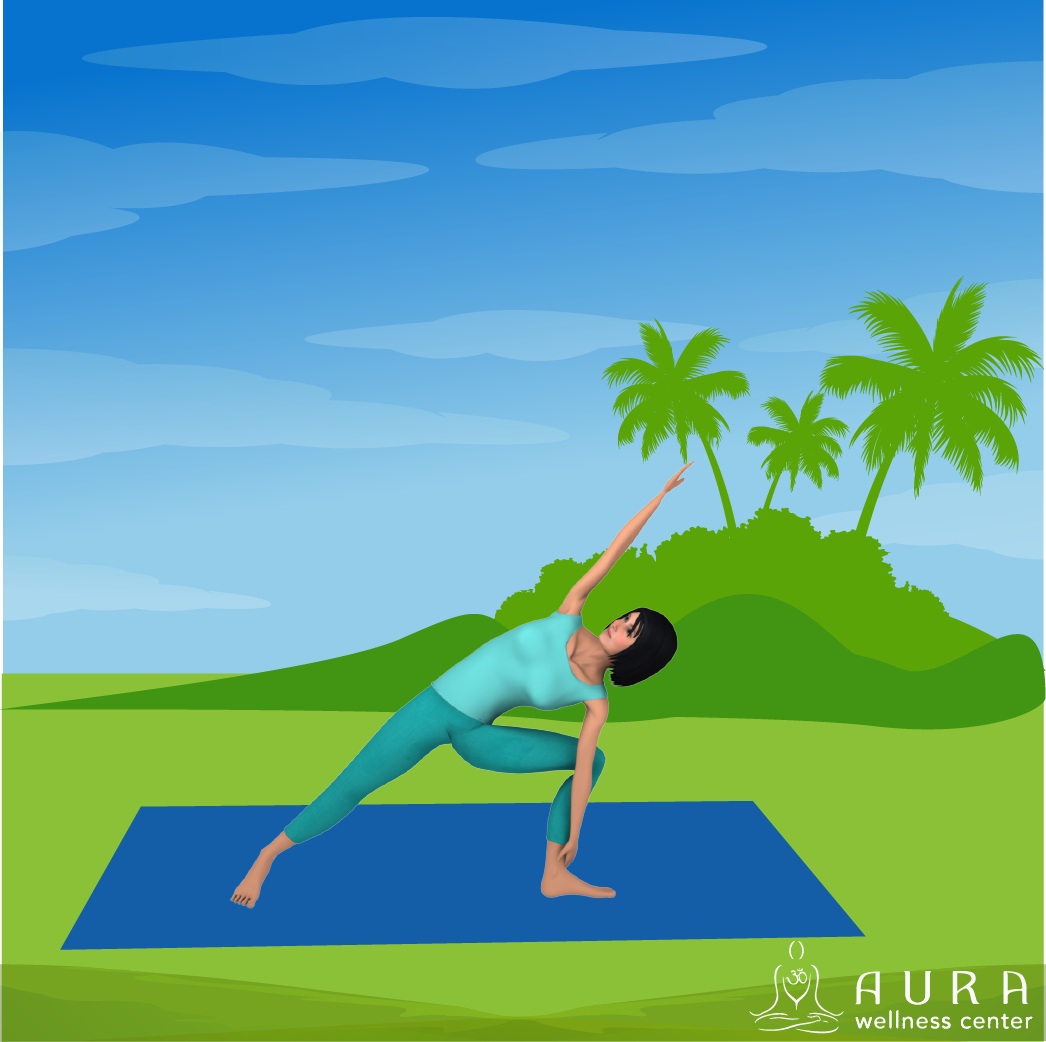
Side Plank Pose is a balancing asana that definitely generates more agni or inner fire. It is usually practiced towards the end of the standing poses. Side Plank Pose is very strengthening for the entire side of the body, arms, wrists and ankles. Side Plank Pose also strengthens the entire torso region and opens up the shoulders, upper back and throat areas. To practice Side Plank Pose, instruct your students to move through a vinyasa and pause in Downward Facing Dog.

From Downward Facing Dog, ask your Yoga students to keep their right hand on the mat while turning to the right. The right hand will remain in position with the fingers facing the front of the mat. The outer edge of the right foot should be flush against the mat with the inner edge of the left foot resting on top of the right foot. The legs should be perfectly lined up and the torso also kept in a straight line. The left arm is raised above the body and in line with the shoulders and the right arm. The left palm faces away from the body. Ask your Yoga students to hold Side Plank Pose for three to five complete breaths, and then release the posture and flow through a vinyasa or rest in Child’s Pose.

© Copyright 2013 – Virginia Iversen / Aura Wellness Center – Publications Division

See our testimonials to find out what our graduates have to say about our selection of distance learning yoga teacher certification programs.

If you are teaching a yoga class, a yoga school manager, blogger, e-zine, or website publisher, and are in need of quality content, please feel free to use my blog entries (articles). Please be sure to reprint each article, as is. Namaste!


Share


Increasing Agni in your Yoga Class: Crow Pose

May 10th, 2013

500 hour yoga teacher certification onlineBy: Virginia Iversen, M.Ed

“Agni” is the Sanskrit word for fire, heat and energy. Agni is also the fire that fuels the burning away of negative mental and physical habits during Yogic practices that are not in our own best interest or for our highest good. As a metaphor, you can imagine a Brahmin priest offering a ladle of clarified butter or ghee into a sacred fire. This sacrificial offering is symbolic of the release of negative mental and physical habits that keep us separated from the divine light within our own hearts. In the ladle are all of the habits of mind and body that keep us mired in one degree or another of negativity and inertia. Until we release this heaviness or tamas, we will be prevented from reaching our own highest potential. 

In order to help facilitate the process of release and renewal through letting go of the habitual thought patterns and physical tension that dampens our energy, increasing the level of agni or fire in your Yoga classes will help your students to lighten and enhance their life force energy. There are a variety of poses and sequences of asanas that will ignite and increase the heat and energy in your Yoga classes. Fast-moving Power Yoga sequences, vigorous standing poses and challenging balancing postures will all help to increase the level of fire in your classes. 

* Crow Pose or Bakasana  

Crow Pose is a wonderful balancing Yoga pose that strengthens the arms, shoulders and core muscles. It also helps to hone a sense of balance, competency and focus. Additionally, Crow Pose stretches out the muscles of the wrists, forearms and hands, making it a very therapeutic pose for those of us who spend a lot of time on the computer. Crow Pose is often practiced in the context of a series of Sun Salutations and standing postures. 

To teach your Yoga students Bakasana, have them fluidly move through the beginning sequence of Sun Salutation B and into a squatting position on their Yoga mats from Downward Facing Dog. Their feet should be a little wider than hips’ distance apart and parallel to each other. Direct your students to place their hands approximately twelve inches in front of their feet with their fingers spread comfortably far apart and facing the front of the Yoga mat. With their next inhale, guide your students to place their shins on their upper arms and lean slightly forward.

As they lean forward and balance on their hands, their feet will come off of the Yoga mat when they rest the weight of their body entirely on the back of their arms. The dristi or gazing point in this posture is two to three feet in front of them on the floor. If you have a student or two who feels anxious about tipping over, have them place a folded blanket just in front of them for padding. This should help to alleviate their anxiety. Remind your students to keep breathing while they are in the pose. Instruct your Yoga class to hold Crow Pose for three to five breaths, and then release the posture and move through a vinyasa or rest in Child’s Pose. 

© Copyright 2013 – Virginia Iversen / Aura Wellness Center – Publications Division

See our testimonials to find out what our graduates have to say about our selection of distance learning yoga certification programs.

If you are a teacher, yoga school manager, blogger, e-zine, or website publisher, and are in need of quality content, please feel free to use my blog entries (articles). Please be sure to reprint each article, as is. Namaste!

Share


Teaching Yoga to Students Recovering from Surgery or Living with Chronic Illness: Contemplative Practices

May 7th, 2013

yin yoga instructor certification intensiveBy: Virginia Iversen, M.Ed

If you are a Yoga instructor who is teaching one or more students who are recovering from surgery or living with a chronic illness, modifying the practice in order to tailor the intensity level to each student’s current ability is critically important. The awareness and application of therapeutic Yoga asanas, breathing exercises and contemplative practices can be profoundly healing to students who are working toward regaining their health. Your inner attitude or “bhav” towards your students’ efforts in Yoga class can also substantially impact the healing effect of the class on your students. 

In fact, when you are teaching a Yoga class, mentally holding the image of your students in your conscious awareness as whole and vibrantly healthy will help to support your students in seeing themselves the same way. As your Yoga students begin to mentally shift from focusing on what may not be working correctly in their bodies to the parts of their bodies that are healthy and strong, they will begin to align themselves with a state of strength and well-being. This internal shift from a negative to a positive perspective about their bodies will also help to offset depression, which so often accompanies serious illness, injury or a lengthy recuperation from a major surgery.  

As a Yoga teacher, it is also important to be aware of and uproot any of your own negative thoughts about your students, especially those students who may be struggling with health issues. Thoughts such as, “I can’t believe she is still doing the Yoga asanas while seated in a chair. Her knee seems strong enough now to support her weight!” Thoughts such as these will energetically undermine your students’ sense of themselves as healthy yogis or yoginis who are temporarily healing from an illness or injury, instead of students who are chronically physically unwell. 

The same effect holds true for each Yoga student’s inner attitude. If a student feels despondent, weak and unhealthy and continues to focus on those negative states of being, he or she will undermine their own efforts during Yoga class. If, on the other hand, you gently and compassionately remind your students to focus on the fact that they made it to class, the amazing effort they are making to regain their own health and the parts of their bodies that are strong and healthy, their spirits will be uplifted and a sense of purpose, strength and mastery will begin to fill their bodies, which will deeply support them during the healing process. 

© Copyright 2013 – Virginia Iversen / Aura Wellness Center – Publications Division

See our testimonials to find out what our graduates have to say about our selection of affordable hatha yoga certification programs.

If you are a teacher, yoga school manager, blogger, e-zine, or website publisher, and are in need of quality content, please feel free to use my blog entries (articles). Please be sure to reprint each article, as is. Namaste!

Share


Therapeutic Yoga Asanas for Insomnia?

May 3rd, 2013

500 hour hatha yoga certification program

By Faye Martins

Insomnia can be a difficult condition to treat. There are several causes of insomnia and these can include hormonal fluctuations, stress, medical problems and emotional issues. Insomnia is a complicated and highly-individualized condition and in reality, there isn’t a single cure for it. However, yoga has been known to alleviate insomnia. Certain asanas promote calmness and serenity that can lead to better sleep.

Some of these asanas are inversions, but not everyone should be doing inversions due to health conditions, such as high blood pressure, heart problems, eye problems, previous stroke epilepsy and more. Discuss inversions with your physician before doing them. If you are cleared by your doctor and you are suffering from insomnia, here are some inverted yoga asanas (poses) to try just before bedtime.

Inverted Poses – All inverted yoga poses are practices that help you sleep better. This can especially alleviate insomnia caused by hormonal changes. One inversion to try is Halasana or the Plow Pose. In this posture, you do not have to be perfect as long as you are achieving the proper posture. It is important to coordinate your breathing with your movements.

Time your breaths while slowly moving your legs over your head to the floor. Try holding this pose for 20 seconds and gradually add time up to a few minutes if it is possible. You can modify Halasana by starting out on you back with the top of your head facing a wall in Shavasana.  

Raise your legs and touch the bottoms of your feet on the wall. Slowing walk your feet down as far as is comfortable. Please do not force your feet down to the floor. You should be able to breathe completely at all times while holding this asana.  If your feet naturally go to the floor and you can breathe completely that is fine too.  The wall gives practitioners options to modify for different bodies. Other poses to try are the Salamba Sirsana or the Supported Headstand and the Viparita Karani or the Legs up the Wall (my personal favorite before bedtime).

Forward Folding Asanas – Just like yoga inversions, forward bends help in relieving insomnia caused by hormonal fluctuations. Any of the forward bends such as the Prasarita Padottanasana or Standing Forward Bend, Adho Mukha Svanasana or Downward Facing, Uttanasana or Standing Forward, Sirsana or Head to Knee and the Paschimottanasana or Seated Forward Fold can be performed prior to heading for bed. One of the most common of these yoga poses is the Uttanasana.

All you would need to do is stand in front of your bed then slowly lean forward using your hips while inhaling and exhaling. You will then slowly move forward until your head is resting on the nearby stack of pillows or the bed mattress itself. Don’t stress if you cannot reach the bed with your head. Just rest your arms on it instead. For those who are naturally flexible feel free to fold as deep as you like, but no force is required. Your back should be reasonably straight and you should be able to fully inhale and exhale regardless of how deep you go into any posture. Therefore, do not hold your breath for the sake of your ego. Uttanasana and the other forward bends should be held in position for 20 seconds up to a few minutes.

Supported Shoulder Stand – Among all the asanas, Sarvangasana or Supported Shoulder Stand is one of the most helpful. This posture has been called “Queen of the Asanas.” When performed prior to bedtime, it helps your body relax and signals it to sleep.  When practiced during the day, Sarvangasana may help you compensate for lost sleep. This is basically a “jackknife” wherein your shoulder blades are resting on the ground while your legs are up in the air. If you find this pose too difficult, you can also support your legs or feet on a wall or chair.

Incorporating these asanas into your bedtime routine can help alleviate your insomnia. Do not expect results right away and consistency is key when trying to deal with insomnia through yoga.

© Copyright 2013 – Faye Martins / Aura Wellness Center – Publications Division

Faye Martins is a certified Yoga teacher and an exclusive author for Aura Wellness Center.

See our testimonials to find out what our graduates have to say about our selection of affordable hatha yoga instructor training programs.

If you are a teacher, yoga school manager, blogger, e-zine, or website publisher, and are in need of quality content, please feel free to use my blog entries (articles). Please be sure to reprint each article, as is, including the resource box above. Namaste!

Share


Introducing the Concept of Alchemy to your Yoga Class

May 1st, 2013

hot yoga instructor certification courseBy: Virginia Iversen, M.Ed

If you have actively engaged in or taught Yoga classes for an extended period of time, you are familiar with the potential of the practices to transmute heaviness into lightness and a bleak outlook on life into one of hope and enthusiasm. The word “enthusiasm” actually means to be filled with the spirit or energy of God. This energy feels wonderful; vibrant, alive and life sustaining. The Yoga practices of asana, meditation, prayer, chanting and pranayama, when practiced in balance and on a regular basis, have the ability to truly transform a Yogi or Yogini’s life. These ancient practices, as succinctly elucidated in Pantanjali’s Yoga Sutras, provide a comprehensive alchemical path to happiness.

The alchemical process of transforming base physical states and emotions into lightness, love and vibrant well-being, replicates the chemical process of transforming base metals into gold. In fact, there are references to alchemy found in the ancient Vedic texts as far back as the 4th century B.C.E. References to alchemy also abound in Buddhist texts between the 2nd and 5th centuries A.D. where the process of transmuting base metals into gold is clearly laid out. This alchemical process is also applicable in the fields of psychology and self-improvement. In 1913, Carl Jung was one of the first psychologists to adopt the use of the term alchemy in the context of mental health, spiritual growth and inner development.

By introducing the concept of physical and emotional alchemy to your Yoga students, they will more fully understand the various Yogic disciplines as a complete matrix of practices that can transform every area of their lives. From the simple breathing technique of Dirga Pranayama, to learning the deceptively easy practice of truly relaxing in Shavasana, your students will gain a deeper appreciation of the transformative opportunity that each Yoga class provides to them.

In addition to the physical practices of Yoga, you may also wish to incorporate a period of meditation and contemplation into the practice, either at the beginning or end of your class. A beautiful poem or aphorism read aloud to your students will help to lift their spirits and focus their minds on the internal goals of Yoga practice. You may also want to include a period of chanting into your classes. If you do know how to play the harmonium and sing kirtan, great! If you do not know how to play the harmonium, or if you feel shy singing in front of a group, leading a group chant by using a portable CD player will enable you to offer the time-honored practice of chanting to your Yoga students in a non-intimidating fashion.

© Copyright 2013 – Virginia Iversen – Aura Wellness Center – Publications Division

See our testimonials to find out what our graduates have to say about our selection of inexpensive yoga instructor training programs.

If you are a teacher, yoga school manager, blogger, e-zine, or website publisher, and are in need of quality content, please feel free to use my blog entries (articles). Please be sure to reprint each article, as is, including the resource box above. Namaste!

Share


Introducing the Concept of Tamas to your Yoga Class

April 25th, 2013

restorative yoga teacher certification courseBy: Virginia Iversen, M.Ed

According to Yogic philosophy, the material world arises from the underlying field of pulsating energy, known in Sanskrit as “prakriti.” Within this field, there are three energetic qualities that comprise physical existence. These three qualities or gunas are known as tamas, rajas and sattva. Tamas is comprised of the qualities of heaviness, darkness, denseness and inertia. Rajas holds the qualities of movement, energy and fire. Sattva is the very light vibrational energy of purity, goodness and pervading peace.

Ultimately, the goal and path of Yoga is one of purification of the tamasic and rajasic qualities into the purity and light of the sattvic guna. This is the light of God’s presence, both within ourselves and in the external world. By introducing these three gunas to your Yoga students, you will be able to teach them about the underlying alchemical processes of the various Yoga practices and techniques. This will help to frame the practice of asanas, meditation and pranayama exercises into the classical Yogic goal of experiencing union with the divine.

Many students and teachers begin practicing Yoga in order to release inertia, heaviness and lethargy. The practice of asanas, particularly when done in a heated room or in a flowing, vinyasa fashion, will definitely help to move stuck energy, release stress and tension and increase the pulsation of the life force throughout one’s being. To place the practice of “moving stuck energy” through a challenging asana and pranayama practice into the traditional Yogic framework of alchemy, will help your students to understand the purifying and uplifting practice of Yoga in a more comprehensive manner.

When you are introducing the concept of tamas to your Yoga students, you may want to explain the general concept of the three gunas first. In this way, they will have a general understanding of the basic Yogic concept of creation. After introducing the three gunas, illustrating tamas with examples from everyday life, even you own life, will help your students to further understand the effect of too much tamas on their experience of life. Tamas is often experienced as a lack of energy, a sense of heaviness, inertia, indifference and even depression. The process of releasing tamas from our bodies and minds usually begins with the movement and energy of the rajasic guna. Moving one’s body through a complete practice of Yoga asanas and breathing exercises is a sure fire way to begin to ultimately transform ourselves into lightness, love and peace.

© Copyright 2013 – Virginia Iversen – Aura Wellness Center – Publications Division

See our testimonials to find out what our graduates have to say about our selection of distance learning yoga instructor training courses.

If you are a teacher, yoga school manager, blogger, e-zine, or website publisher, and are in need of quality content, please feel free to use my blog entries (articles). Please be sure to reprint each article, as is, including the resource box above. Namaste!

Share


Teaching Yoga to Students Recovering from Surgery or Living with Chronic Illness: Modified Standing Poses

April 20th, 2013

500 hour yoga teacher training intensive courseBy: Virginia Iversen, M.Ed

Teaching Yoga to students who are recovering from surgery or living with chronic illness brings with it unique challenges and rewards. As you become a seasoned Yoga instructor, your repertoire of therapeutic techniques and modifications will expand. These therapeutic techniques, modifications and the appropriate use of Yoga props will support you in safely guiding your students through a full class. Of course, each student is uniquely challenged by his or her individual life circumstances.

In order to fully and safely support the Yoga students in your class who are living with physical challenges, it is important to be aware of their current health issues. By taking the time to acquaint yourself with each new student before class begins, and reacquainting yourself with ongoing students if their health status changes, you will be more prepared to safely guide your students through a class. The strategic use of Yoga props, including bolsters, blocks and chairs, will help the students who are living with physical challenges to participate more fully in a multi-level Yoga class.

Modified Warrior 1 Pose

Warrior 1 or Virabhadrasana is one of the fundamental standing asanas of most Yoga classes. This pose expands and stretches out the lung area, chest, neck, shoulder, back, abdomen, and groin muscles. It strengthens the legs, calves and ankles. If the posture is practiced in correct alignment, it can also facilitate the optimal alignment of the knees, which helps to promote the healing process of many knee injuries. Traditionally, Warrior 1 Pose is practiced in a standing position with both knees off of the mat.

If you teaching a Yoga student who is unable to stand comfortably, the arm movements and breathing components of the posture may be practiced while seated in a chair. If one or more of your students has trouble balancing or is healing from an injury or surgical procedure that makes practicing Virabhadrasana 1 in a full standing position difficult or painful, this posture may be practiced with the back knee on the mat. When Warrior 1 Pose is practiced in this way, the expansion throughout the front of the body is often increased, so the student will still reap a substantial benefit from practicing the posture in its modified form.

© Copyright 2013 – Virginia Iversen – Aura Wellness Center – Publications Division

See our testimonials to find out what our graduates have to say about our selection of distance learning yoga instructor certification courses.

If you are a teacher, yoga school manager, blogger, e-zine, or website publisher, and are in need of quality content, please feel free to use my blog entries (articles). Please be sure to reprint each article, as is, including the resource box above. Namaste!

Share


Teaching Yoga to Students Recovering from Surgery or Living with Chronic Illness: Reclining Healing Meditation

April 12th, 2013

500 hour yoga instructor certification programBy: Virginia Iversen, M.Ed

Teaching Yoga to students who are living with a chronic illness, injury or healing from a surgical procedure is both a challenge and a wonderful opportunity to make a substantial difference in a student’s life. By modifying Yoga asanas according to your students’ individual needs with Yoga props and creative sequencing, you will allow students of all levels to participate more fully in a multi-level class. In addition, if you allow time for a reclining healing meditation at the end of class, you will support your students in practicing the time-honored tradition of Pratayahara or the withdrawal of the senses, which will allow them a grace period of rest when they can focus on sending healing energy throughout their body and mind.

* Reclining Healing Meditation

This meditation is wonderful to do lying down, ensconced in blankets and supported by a Yoga bolster under the knees. Before beginning the Reclining Healing Meditation, it is recommended that you ask your students if they need a bolster or an extra blanket. If eye bags are available at your Yoga studio, you may also want to suggest that your students cover their eyes with the eye bags, in order to further facilitate the withdrawal of the senses from the external world.

When your Yoga students are ready to begin the Reclining Healing Mediation, instruct them to lie down on their Yoga mats and place a bolster under their knees. They may wish to cover themselves with a blanket and place an eye bag over their eyes. To begin the meditation, have your students take five complete, slow breaths. As they complete the fifth breath, suggest that your students visualize a healing white light (or a color of their choice) pouring gently into their Crown Chakra. As they breathe fully, gently guide them in visualizing the healing light flowing like honey throughout their entire body, filling them with a nourishing, warming energy.

After the warm, honey light has filled their bodies completely; if there is one part of their body that needs special attention today, guide your Yoga students to focus the healing light even more strongly in that particular area. Allow at least a full ten minutes for this Reclining Healing Mediation. When your students have completed the meditation, instruct them to remove their eye bags and Yoga bolster and roll to their right hand side. After pausing for a few breaths, instruct your students to gently push themselves up and pause in Easy Seat on their mats as they feel the reverberation of the healing energy throughout their entire being.

© Copyright 2013 – Virginia Iversen – Aura Wellness Center – Publications Division

See our testimonials to find out what our graduates have to say about our selection of distance learning yoga teacher certification programs.

If you are a teacher, yoga school manager, blogger, e-zine, or website publisher, and are in need of quality content, please feel free to use my blog entries (articles). Please be sure to reprint each article, as is, including the resource box above. Namaste!

Share


Yoga Exercises for Recovery from Chemotherapy

April 9th, 2013

restorative yoga teacher certification programBy Kimaya Singh

People who endure the long, grueling process of chemotherapy are often depleted of energy, strength, and overall well being. For cancer patients, yoga techniques have been found to be extremely beneficial in increasing an individual’s sense of well being, decreasing anxiety levels, and prompting a better “mind-body” connection, which is extremely helpful when fighting cancer.

The core of yogic methodology focuses on meditative practices, which are essential for the effective practice of this ancient and evolving tradition. Meditative practices associated with yoga training have the tendency to induce an extremely calming response to participants. Meditative practice can, in turn, prompt the brain to release endorphins and chemicals in order to promote a long lasting sense of well being.

Chemotherapy is extremely draining for individuals who have to undergo this unforgiving cancer treatment. The use of restorative yoga methods, in conjunction with traditional cancer treatments, is a great way to incorporate holistic methods which focus on the mind body connection, in order to improve a patient’s mental, physical, emotional, and spiritual health.

It is important for everyone to understand that anyone can get cancer. If you don’t have it, thank your luck stars for your good health every day. Good people, who eat right, treat people nice, don’t have addictions, and make wise health decisions are diagnosed with cancer every day. Yes, some lifestyles can lead to a higher risk of cancer, but no amount of self-righteousness will protect us from the reality that cancer can attack anyone, including innocent babies. This is the lottery that no person wants to win!

With cancer, it is often difficult to focus on the present, with so much uncertainty in regards to the future. Additionally, some people tend to second guess their past decisions and engage in self-blame. Thinking about what might have been the cause can’t solve the present. This cycle tends to drag one’s spirits down. Yoga also focuses on the use of pranayama (slow and controlled breathing) and asana (the physical postures and moves associated with yoga methods) practices in order to bring the body into a more congruent state. When an individual utilizes the breathing methods associated with yoga training, he or she is focused on the here and now. Pranayama practice has the power to bring into effect positive changes within one’s mental focus and well being. It becomes easier to take each day moment by moment, while focusing on the present, and not on the future or past. It is imperative for individuals who are undergoing chemotherapy to learn how to not let themselves become overrun with worries and fears in regards to the future.

Many cancer treatments are now incorporating the use of restorative yoga to promote a great sense of overall well being, mental health, and higher quality of life among cancer patients. Cancer is an uncertain disease, with unclear outcomes, which often has an extremely negative effect on families and the patient’s psychological well being. A person who has cancer often feels betrayed by their body and angry with themselves for things which they cannot control. Yoga has the power to help cancer patients learn how to regain a sense of power over their mental well being, as well as develop an appreciation for what their bodies are still able to accomplish.

© Copyright 2013 –  Aura Wellness Center – Publications Division

Click on the Courses & Products button in the upper left of this page for information about our restorative teacher program and other reasonably priced yoga teacher training programs by Aura Wellness Center.

If you are a yoga teacher, yoga studio owner, blogger, e-zine, or website publisher, and are in need of quality content, please feel free to use my blog entries (articles). Please be sure to reprint each article, as is, including the resource box above. Namaste!

Share


Yoga Skills for Positive Psychology

April 7th, 2013

vinyasa yoga teacher training programBy Kimaya Singh

Although many people are aware of the vast benefits of practicing yoga techniques on a regular basis, most are unaware about how valuable this ancient practice can be for those who are looking to utilize the aspects of positive psychology into their lives. The field of positive psychology focuses on how to increase the level of happiness and well being in people’s lives, by helping them to become congruent with their most inner thoughts and belief systems.

For those who would like to enrich their lives with a sense of fulfillment and contentment, one must bring their physiological state of being under control as well. Yoga methods focus on the alignment of the mind and body, by bringing them together into a state of synchronicity, in order to smoothly transition into each fluid movement. By utilizing asanas (poses) and pranyama (controlled breathing), an individual is able to achieve a higher state of contentment, as well as feel a sense of interconnectedness with those around him.

What’s especially wonderful about the use of a yoga training session for promoting positive psychology, is that it teaches an individual about how to control one’s body and mind. Many times, those who seek out professional help are in desperate need of finding a way to adequately address maladaptive thoughts and behaviors. For these people, it can be difficult to feel in control of their minds, especially if they are bothered by troublesome thought patterns. Yoga techniques are one of the best ways to show people how to maintain control of one’s mind and body. When an individual practices yogic methodology on a daily basis, he is more inclined to focus on the positive aspects in life, therefore making adherence to the principles of positive psychology much easier.

It is no wonder why the use of yoga practices has been utilized in conjunction with many traditional approaches to psychology. The field of psychology is deeply focused on the ways in which the mind and body are interconnected. Many times, psychological well being is dependent on the interactions between biology, psychology, and sociology. An individual is much more likely to maintain a positive state of well being, if he or she is able to utilize yogic methods to maintain a congruent state of being. As the field of positive psychology continues to grow and expand, yoga techiques will continue to be utilized to help foster a positive state of mind.

© Copyright 2013 –  Aura Wellness Center – Publications Division

Click here for more information about online yoga teacher training programs by Aura Wellness Center.

If you are a yoga teacher, yoga studio owner, blogger, e-zine, or website publisher, and are in need of quality content, please feel free to use my blog entries (articles). Please be sure to reprint each article, as is, including the resource box above. Namaste!

Share


SEARCH

FREE MEMBERSHIP

Read More »